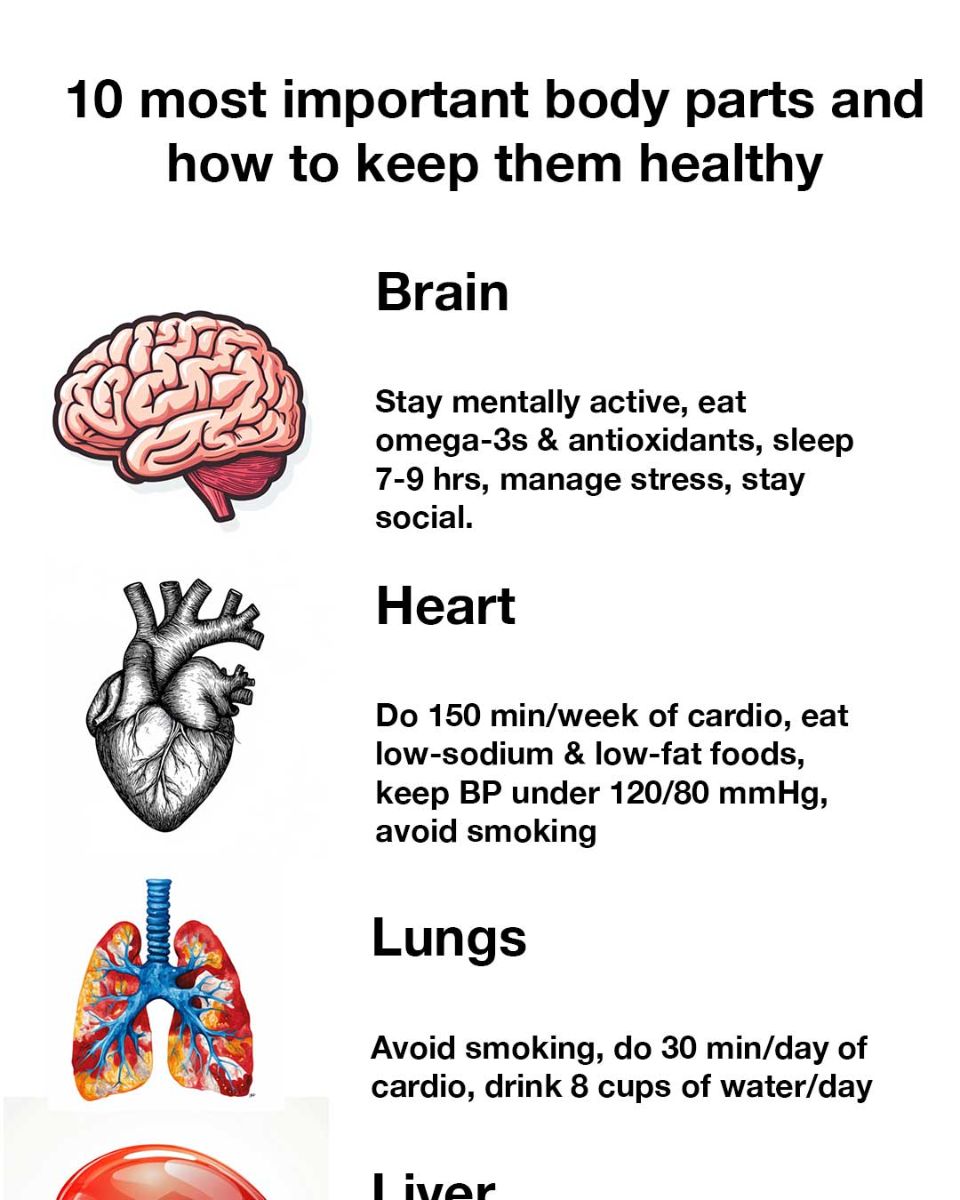
The human body is an intricate system of interconnected parts, each playing a vital role in maintaining overall health and functionality. Understanding the importance of these body parts and how to keep them healthy is crucial for leading a long and fulfilling life. From the brain, which orchestrates every thought and movement, to the skin, which acts as a protective barrier, each part requires specific care and attention. By adopting healthy habits and making informed lifestyle choices, we can ensure that our bodies function optimally, preventing diseases and enhancing our quality of life.
1. The Brain: Central Command of the Body
The brain controls bodily functions, processes sensory information, and enables cognitive abilities such as thinking, memory, and emotions. To optimize brain health:
Mental Exercises: Engage in activities like puzzles, reading, or learning new skills for at least 30 minutes daily.
Diet: Consume two servings of fatty fish (e.g., salmon, mackerel) per week for omega-3 fatty acids; eat at least five servings of fruits and vegetables daily for antioxidants; and ensure intake of B vitamins (found in whole grains and leafy greens).
Sleep: Aim for 7–9 hours of quality sleep per night to support memory and cognitive function.
Stress Management: Practice mindfulness, meditation, or yoga for 10–15 minutes daily to reduce stress.
Social Engagement: Maintain at least two meaningful social interactions per week to promote mental well-being.
2. The Heart: The Lifeline of Circulation
The heart pumps oxygen-rich blood throughout the body, ensuring proper function of organs. For heart health:
Exercise: Engage in at least 150 minutes of moderate-intensity aerobic exercise per week (e.g., brisk walking, cycling).
Diet: Consume less than 2,300 mg of sodium per day, reduce intake of saturated fats (limit to 10% of daily calories), and eat fiber-rich foods like oats, beans, and whole grains.
Cholesterol & Blood Pressure: Monitor levels regularly; LDL cholesterol should be below 100 mg/dL, and blood pressure should be below 120/80 mmHg.
Avoid Smoking & Alcohol: Quit smoking entirely and limit alcohol intake to no more than one drink per day for women and two for men.
Stress Management: Engage in relaxation techniques like deep breathing or meditation.