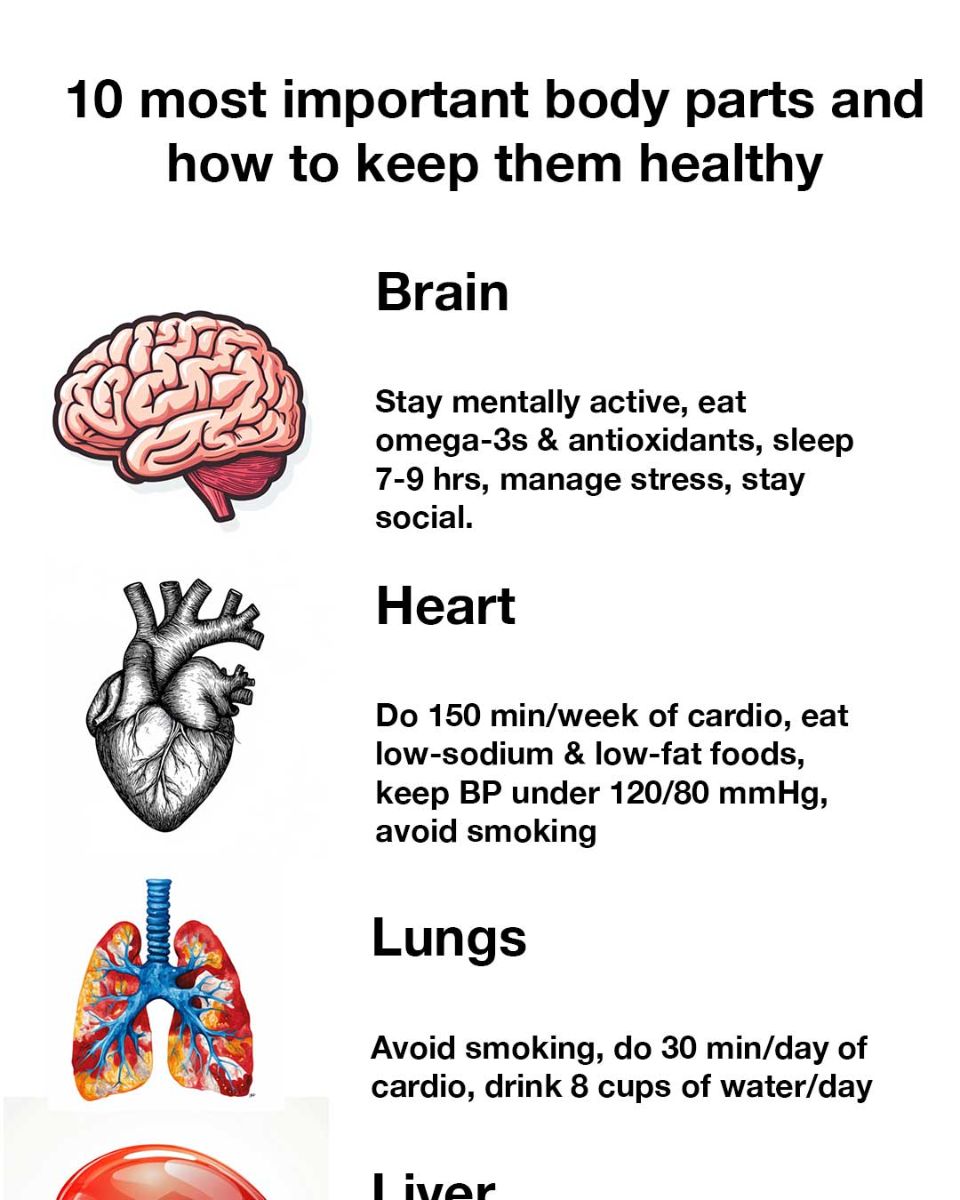
10 most important body parts and how to keep them healthy
3. The Lungs: Breathing Life into the Body
The lungs facilitate gas exchange, providing oxygen to the body and removing carbon dioxide. To keep them healthy:
Avoid Smoking & Pollutants: Eliminate exposure to tobacco and minimize time in polluted environments.
Deep Breathing Exercises: Practice diaphragmatic breathing for 5–10 minutes daily to enhance lung function.
Cardiovascular Exercise: Engage in at least 30 minutes of aerobic exercise, 5 days a week to strengthen lung capacity.
Indoor Air Quality: Use air purifiers, keep humidity levels between 30–50%, and avoid strong chemicals.
Hydration: Drink at least 8 glasses of water per day to keep mucus in the lungs thin and easier to expel.
4. The Liver: The Body’s Detox Powerhouse
The liver detoxifies the blood, produces bile for digestion, and stores essential nutrients. To maintain liver health:
Alcohol Consumption: Limit alcohol to no more than one drink per day for women and two for men.
Diet: Reduce intake of processed foods and trans fats, and eat at least five servings of fruits and vegetables per day.
Hydration: Drink 8–10 glasses of water daily to aid detoxification.
Exercise: Engage in at least 30 minutes of physical activity most days of the week to prevent fatty liver disease.
Limit Medication Overuse: Avoid unnecessary painkillers (e.g., NSAIDs) and supplements that can strain the liver.
5. The Kidneys: Essential Filters of the Body
The kidneys remove waste, regulate fluids, and balance electrolytes. For optimal kidney health:
Hydration: Drink at least 2–3 liters of water daily (unless restricted by a medical condition).
Diet: Limit sodium intake to less than 2,300 mg per day and reduce processed foods.
Monitor Blood Pressure & Sugar Levels: Aim for a blood pressure of 120/80 mmHg and blood sugar levels below 100 mg/dL (fasting).
Medication Awareness: Avoid excessive NSAID use (e.g., ibuprofen) which can harm kidney function.
Exercise: Engage in at least 150 minutes of moderate activity per week to support kidney function.
6. The Skin: The Body’s Protective Barrier
The skin protects against infections, regulates temperature, and prevents water loss. To maintain healthy skin:
Hygiene: Wash face twice daily and bathe regularly to remove dirt and bacteria.
Sun Protection: Use broad-spectrum sunscreen (SPF 30 or higher) daily, even on cloudy days.
Moisturization: Apply a hydrating lotion after showers, especially during dry seasons.
Diet & Hydration: Consume at least 2 liters of water daily and eat antioxidant-rich foods like berries and leafy greens.
Sleep & Stress Management: Get 7–9 hours of sleep per night and manage stress to prevent breakouts and premature aging.
7. The Bones: The Framework of the Body
Bones provide structure and enable movement. To maintain bone strength:
Calcium Intake: Aim for 1,000 mg of calcium daily (1,200 mg for women over 50) from dairy, leafy greens, or supplements.
Vitamin D: Get 600–800 IU daily through sunlight, fortified foods, or supplements.
Weight-Bearing Exercises: Perform strength training or weight-bearing exercises (e.g., jogging, dancing) at least 3 times per week.
Avoid Smoking & Excessive Alcohol: Both weaken bones and increase fracture risk.
Bone Density Tests: Screen for osteoporosis after age 50, especially for women.