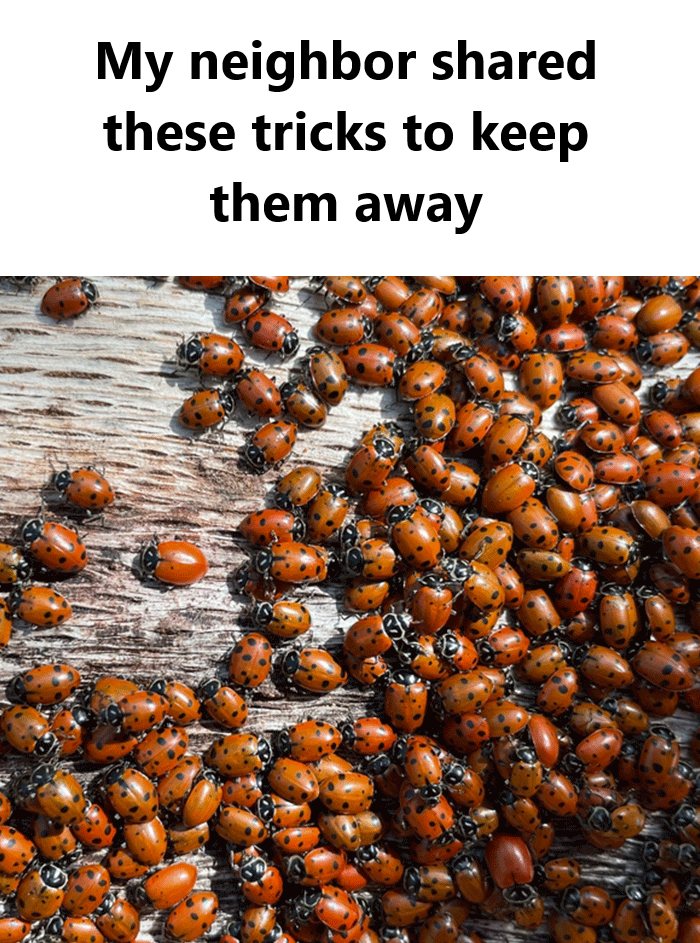
Both Native and Asian Ladybugs Can Be Found Indoors
When you find ladybugs inside, it is often the Asian variety. This species is not originally from the Netherlands; it hails from Asia. They arrived in the Netherlands in the 1990s, where they were introduced to control aphids in greenhouse cultivation. The idea was that they wouldn’t survive our winters. But this species found a solution: they seek warmer places, including our homes. And that’s not necessarily good news, because in addition to their beneficial properties, they pose a threat to some native species, as they eat the larvae of other ladybugs. Moreover, they have few natural predators, so their numbers continue to rise.
In addition to the common red-and-black-spotted Asian ladybug, there are also black variants with red spots and entirely orange ones. It can be difficult to distinguish them from native ladybugs. Native ladybugs you might find indoors are typically the two-spotted or the harlequin ladybug. The former is recognized by its red color with two black spots, although it can also be black with four red spots. The harlequin ladybug has a pinkish or dark yellow color with mottled spots.
What to Do About Ladybugs in the House
Ladybugs release pheromones in the fall to attract and find each other. This is why so many can enter your home at once. They prefer to overwinter in sheltered places that are not too warm, so they are more likely to inhabit an attic or garage than a living room, but it can happen.
They don’t cause harm inside, but a ladybug trapped in a corner may attempt to bite you. However, this is rare. If you do nothing, they will eventually return outdoors around March. So, you could simply leave them be. But if there are too many, you probably won’t want to wait that long. They generally stay still because they go into hibernation and don’t move or eat during this time. However, if it gets too warm, they may become active and start flying around. In that case, you can catch them and release them outside. They will then search for another warm place.
You can also gently sweep them up with a dustpan and brush. If you disturb them, they may release a yellow liquid (hemolymph) that can leave stains. If there aren’t too many, you can prevent this by placing a glass over them and sliding a piece of paper underneath.
To prevent them from coming inside, it helps to seal cracks and keep windows closed. But this isn’t very practical if you want to air out the house. Screens can effectively keep them outside.