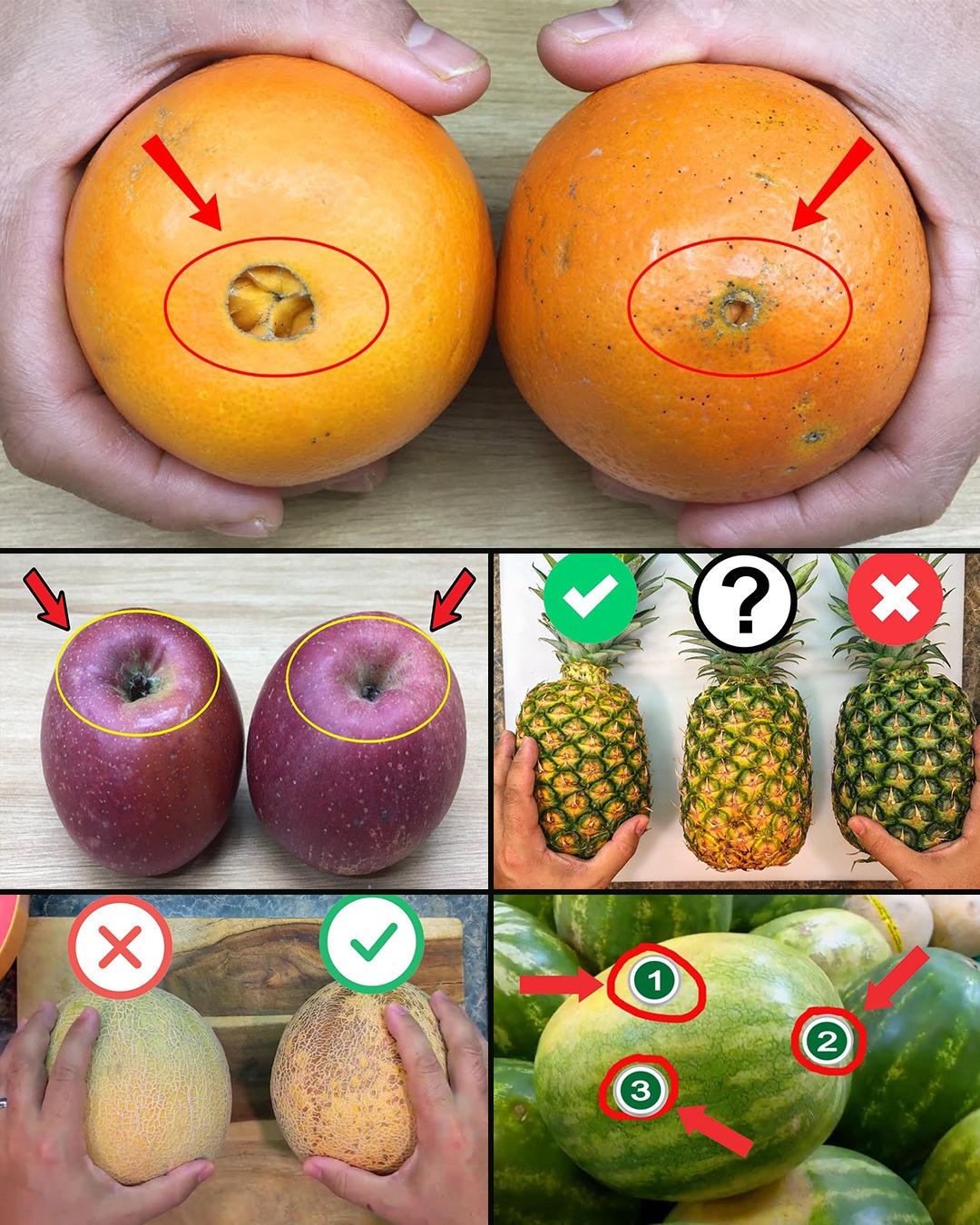
Choosing the best fruit at the grocery store can be tricky, especially if you’re relying solely on luck. However, by paying close attention to their appearance, texture, and color, you can ensure you’re picking the sweetest, juiciest, and most flavorful options. Here’s a practical guide to selecting 11 popular fruits based on visual and physical cues.
1. Oranges
- Shape: Choose oval oranges over round ones. Oval oranges typically have thinner skin and juicier flesh.
- Navel Size: A small navel means a sweeter, more flavorful orange. Large navels indicate a secondary fruit inside, which can dilute the sweetness.
- Color: A deep orange hue with even coloring suggests ripeness. Avoid oranges with patches of green.
- Weight: Heavier oranges contain more juice.
- Stem: A fresh green stem means the orange was recently picked.
2. Watermelon
- Field Spot: A yellow or golden spot (not white or green) means it ripened on the vine and will be sweeter.
- Belly Button (Stem End): A brown belly button indicates it was picked at peak ripeness, while a green one means it was harvested too early.
- Sound Test: Tap the watermelon. A deep, hollow sound means it’s full of water and crisp inside.
- Shape: Uniform, round watermelons tend to be sweeter than elongated ones.
3. Cantaloupe (Muskmelon)
- Netting: A ripe cantaloupe has a rough, raised netting on the skin. If the surface is smooth, it’s underripe.
- Color: Look for a beige or golden hue rather than green.
- Stem End: It should have a slight indentation where the stem was attached. A green stem means it was picked too soon.
- Aroma: A strong, sweet smell at the blossom end indicates great flavor.