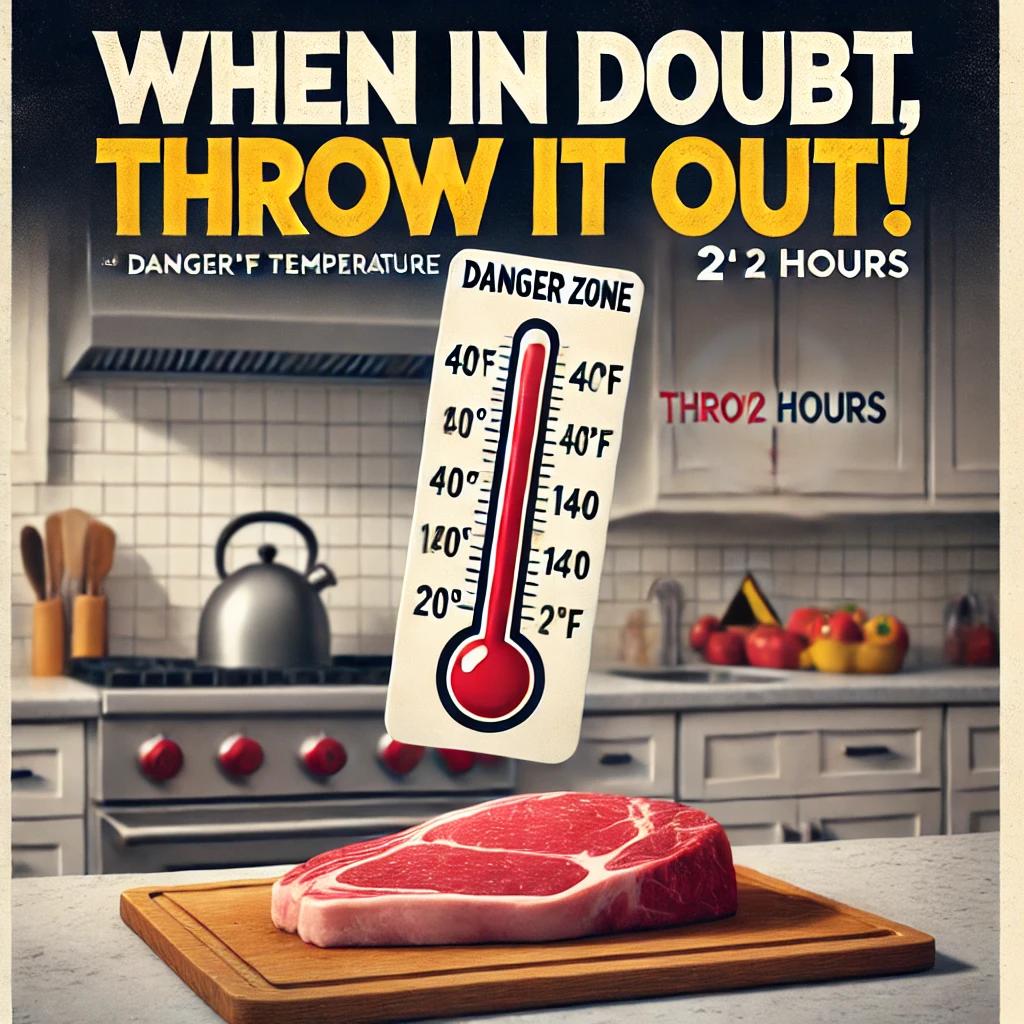
Why Leaving Meat Out Is Risky: Essential Tips for Food Safety
Accidentally leaving food, especially meat, unrefrigerated can be a dangerous oversight due to rapid bacterial growth. Understanding why it’s risky to eat meat left out too long and learning simple food safety tips can help you prevent foodborne illnesses. Here’s a guide to understanding these risks and keeping your perishables safe.
Why It’s Dangerous to Leave Meat Out
Perishable items like meat, particularly ham, poultry, and other proteins, are vulnerable to bacterial growth if left in the “danger zone”—a temperature range of 40°F (4°C) to 140°F (60°C), where bacteria like Salmonella and E. coli can quickly multiply. When exposed to room temperature for more than two hours, meat can become a breeding ground for bacteria. Although it’s a common belief that reheating or cooking the meat will kill any harmful bacteria, it’s crucial to know that “bacteria can release toxins that may remain harmful even after cooking.”
The U.S. Department of Agriculture (USDA) emphasizes, “Food left in the danger zone for more than two hours should be discarded, even if it looks and smells fine.” Since some toxins produced by bacteria are heat-resistant, eating meat that’s been left out for days can lead to foodborne illnesses. Symptoms can range from vomiting and diarrhea to more severe health complications.
Recognizing Spoiled Meat
Meat that’s been out too long doesn’t always show immediate signs of spoilage, making it risky. Spoiled meat often has a sour odor, a slimy feel, or a color change to gray or green—signs that bacteria are present. However, these telltale signs don’t always appear, especially if contamination started while the meat was still refrigerated. When in doubt, follow the age-old rule: “When in doubt, throw it out.”