Top Tips to Prevent Food Spoilage
Being mindful of basic food safety practices helps avoid situations where perishable items like meat are left out too long. Here are key tips to help protect your food:
- Refrigerate Immediately: As soon as you buy or cook meat, store it in the refrigerator or freezer to slow bacterial growth. Aim for a refrigerator temperature below 40°F (4°C) and a freezer setting of 0°F (-18°C).
- Avoid Thawing on the Counter: Though many leave frozen meat on the counter to thaw, it’s not safe. Thaw meat in the fridge overnight, in cold water (change it every 30 minutes), or in the microwave. These methods help keep meat out of the danger zone during thawing.
- Store Meat Properly: Use airtight containers or vacuum-sealed packaging to store meat. This limits air exposure and reduces the risk of cross-contamination. Label each container with dates to track storage time.
- Use Kitchen Reminders: Set a timer or phone reminder when thawing or cooling food. This simple step prevents forgetting and leaving food out.
- Teach Food Safety at Home: Food safety mistakes often happen due to lack of knowledge. Ensuring that family members or roommates know food safety guidelines keeps everyone on track.
What to Do If You Leave Meat Out
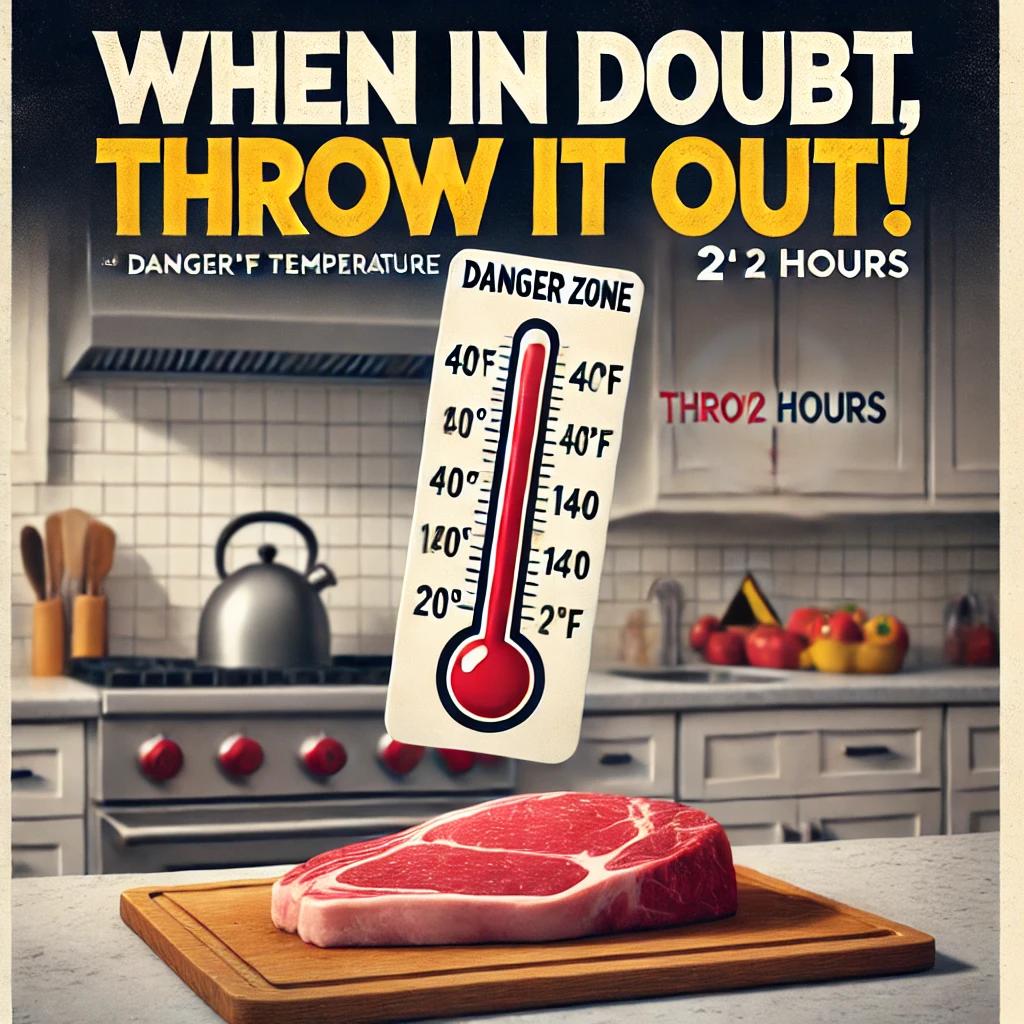
If you find meat left out, start by determining how long it was exposed to room temperature. According to USDA guidelines, if it has been out for more than two hours, it’s safest to discard it. Meat left out overnight or for multiple days should be thrown out without hesitation. While wasting food is never ideal, health risks from foodborne pathogens are far worse, especially for vulnerable groups like children, pregnant women, and immunocompromised individuals.
Common Misconceptions About Food Safety
Food safety myths can lead to risky practices. Here’s the truth about some common misconceptions:
- “The Smell Test Works”: Spoiled food can smell bad, but smell alone isn’t a reliable indicator of safety. Some harmful bacteria don’t affect food’s scent, look, or texture.
- “Reheating Kills All Bacteria”: While heat can kill some bacteria, toxins from certain bacteria, like Staphylococcus aureus and Bacillus cereus, can survive high temperatures. Reheating meat left out doesn’t make it safe.
- “Covering Meat Protects It”: Covering doesn’t stop bacterial growth; temperature is the main concern with perishables.
Safe Alternatives for Meat Storage
If you need to keep meat fresh without refrigeration, preservation methods like curing, dehydrating, or smoking reduce moisture levels, making it harder for bacteria to grow. However, for most household scenarios, refrigeration and freezing are still the best ways to keep meat safe.