Store grains in airtight containers to prolong their shelf life and protect them from humidity. If you notice any off smells or signs of infestation, it’s best to discard the affected grains to prevent contamination of other pantry items.
5. Baking Soda and Baking Powder: Every 6 Months
Baking soda and baking powder are crucial for baking, but they lose their potency over time. Check these items every 6 months to ensure they are still effective. To test baking powder, mix a teaspoon with hot water; it should bubble immediately. For baking soda, mix a teaspoon with vinegar; it should fizz vigorously.
Store these leavening agents in a cool, dry place to maximize their shelf life. If they fail the freshness test, replace them to ensure your baked goods rise properly.
6. Spices and Herbs: Every 6 to 12 Months
Spices and herbs are best checked every 6 to 12 months. While they don’t spoil in the traditional sense, they do lose their flavor and aroma over time. Ground spices tend to lose potency faster than whole spices, so use them within 6 months for optimal flavor.
Store spices and herbs in airtight containers away from heat and light to preserve their quality. If a spice no longer has a strong aroma when you rub it between your fingers, it’s time to replace it.
7. Oils and Fats: Every 3 to 6 Months
Oils and fats, such as olive oil, vegetable oil, and butter, should be checked every 3 to 6 months. These products can go rancid, especially if exposed to heat and light. Rancid oils have an unpleasant smell and taste, which can ruin your dishes.
Store oils in a cool, dark place and keep them tightly sealed when not in use. If you notice any off odors or flavors, it’s best to discard the oil and replace it with a fresh bottle.
8. Condiments and Sauces: Every 3 to 6 Months
Condiments and sauces, including ketchup, mustard, and soy sauce, should be checked every 3 to 6 months. While many of these items have preservatives that extend their shelf life, they can still degrade in quality over time.
Once opened, store condiments in the refrigerator to prolong their freshness. Regularly check for changes in color, texture, or smell, which can indicate spoilage. Discard any condiments that show signs of deterioration.
9. Dried Pasta and Rice: Every 6 to 12 Months
Dried pasta and rice are long-lasting staples, but they should be checked every 6 to 12 months. While they rarely spoil, they can become infested with pantry pests if not stored properly.
Keep pasta and rice in airtight containers to protect them from moisture and pests. If you notice any signs of infestation, such as small bugs or webbing, discard the affected products immediately.
10. Nuts and Seeds: Every 3 Months
Nuts and seeds are nutrient-dense foods that should be checked every 3 months. Due to their high oil content, they are prone to becoming rancid, especially if stored in warm conditions.
Store nuts and seeds in airtight containers in the refrigerator or freezer to extend their shelf life. If they develop an off smell or taste, it’s best to discard them to avoid consuming rancid oils.
11. Flour and Baking Mixes: Every 6 Months
Flour and baking mixes should be checked every 6 months. These products can attract pantry pests and absorb odors from other foods, affecting their quality.
Store flour in airtight containers and consider refrigerating or freezing it to prevent infestation. If you notice any off smells or signs of pests, discard the affected flour and clean the storage area thoroughly.
12. Coffee and Tea: Every 6 to 12 Months
Coffee and tea should be checked every 6 to 12 months. While they don’t spoil, they can lose their flavor and aroma over time, especially if exposed to air and moisture.
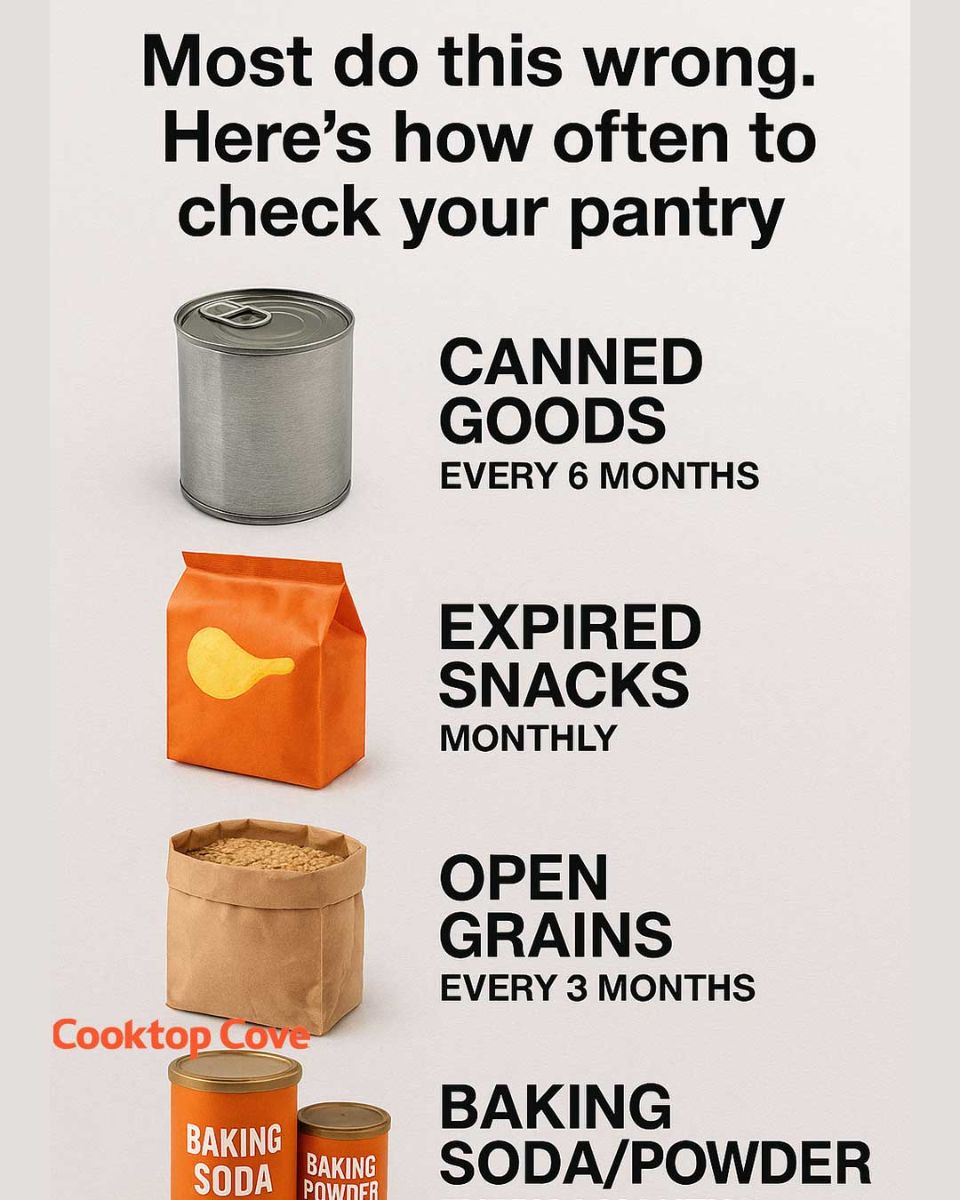
Most do this wrong. Here’s how often to check your pantry
Store coffee beans and tea leaves in airtight containers away from light and heat. If your coffee or tea no longer has a strong aroma or flavor, it’s time to replace it with a fresh batch.