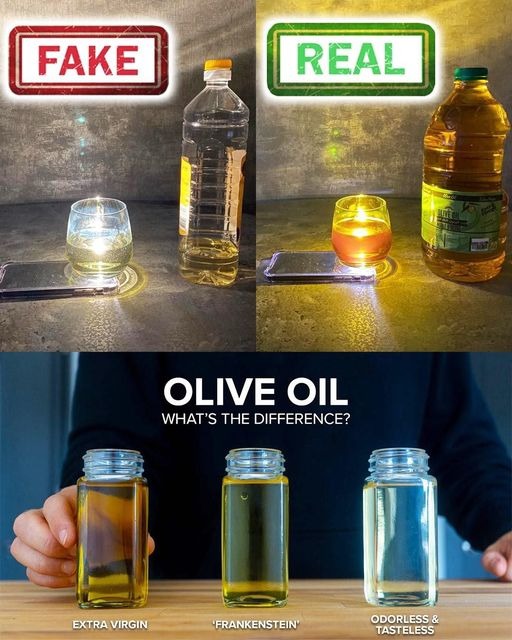
-
What to look for:
-
Harvest date (fresher is better).
-
Origin details (specific region, not just “imported”).
-
Certification seals (e.g., PDO, USDA Organic).
-
-
Red flags: Vague labeling or missing information.
5. The Price Check
-
What to know: High-quality EVOO is more expensive due to careful production.
-
Warning sign: Extremely low prices may indicate adulteration.
6. The Heat Test
-
How to do it: Heat a small amount in a pan.
-
What to look for: Real olive oil will release a pleasant aroma and smoke at a moderate temperature. Fake oils may produce odd smells or smoke too quickly.
Why This Matters
Fake olive oil isn’t just a scam—it can also be harmful. Regulatory agencies are working to combat fraud, but consumers must stay informed. By using these simple tests, you can ensure you’re buying genuine, high-quality olive oil for your family.