
The fish tank is the heart of your aquaponics system, and choosing the right tank is essential:
- Tank Size: The size of the tank should match the space available and the type of fish you plan to raise. For beginners, a 100-200 gallon tank is ideal, as it’s easier to maintain water quality in larger volumes. Smaller tanks (20-50 gallons) are also an option for indoor systems but require more frequent monitoring.
- Material: Fish tanks can be made from various materials, including plastic, fiberglass, and glass. Ensure the material is food-safe and free from chemicals that could harm the fish. Plastic tanks are lightweight and durable, making them a popular choice.
- Location: Place the tank on a sturdy, level surface that can support the weight of the water-filled tank. Ensure it is easily accessible for feeding, cleaning, and monitoring.
- Fish Species: Choose fish that are compatible with the climate and water conditions in your area. Common choices include tilapia, catfish, goldfish, and koi. If you live in a colder climate, consider cold-water species like trout or perch.
Step 3: Install a Grow Bed
The grow bed is where your plants will thrive, and it plays a critical role in filtering the water:
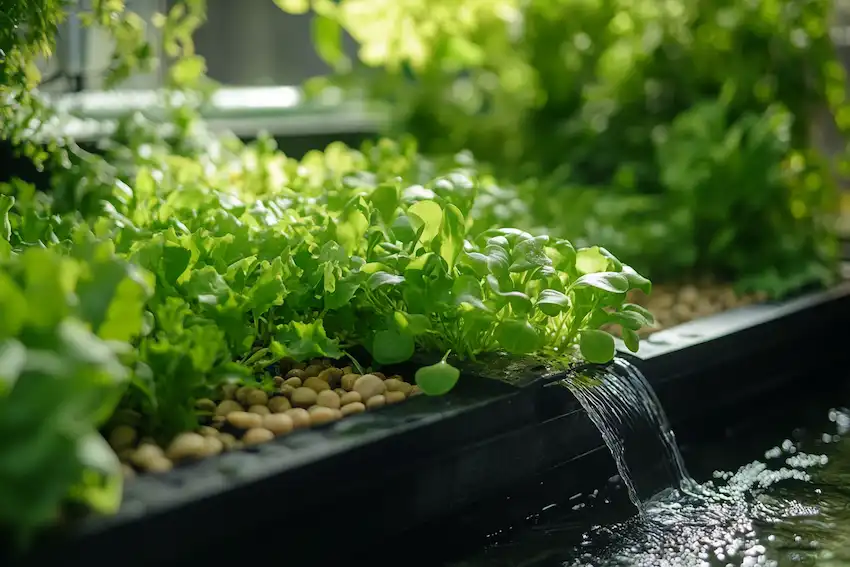
- Positioning: Place the grow bed above the fish tank to allow gravity to return filtered water back to the tank. This setup minimizes the need for complex plumbing and ensures efficient water flow.
- Media: Fill the grow bed with a suitable growing medium that supports plant roots and facilitates nutrient exchange. Popular choices include expanded clay pebbles, gravel, and lava rock. These media are inert, provide good drainage, and promote the growth of beneficial bacteria.
- Size and Depth: The size of the grow bed should be proportional to the fish tank. A general rule is to have a grow bed that is about half the size of the fish tank. The depth of the grow bed should be at least 12 inches to allow root development and adequate filtration.