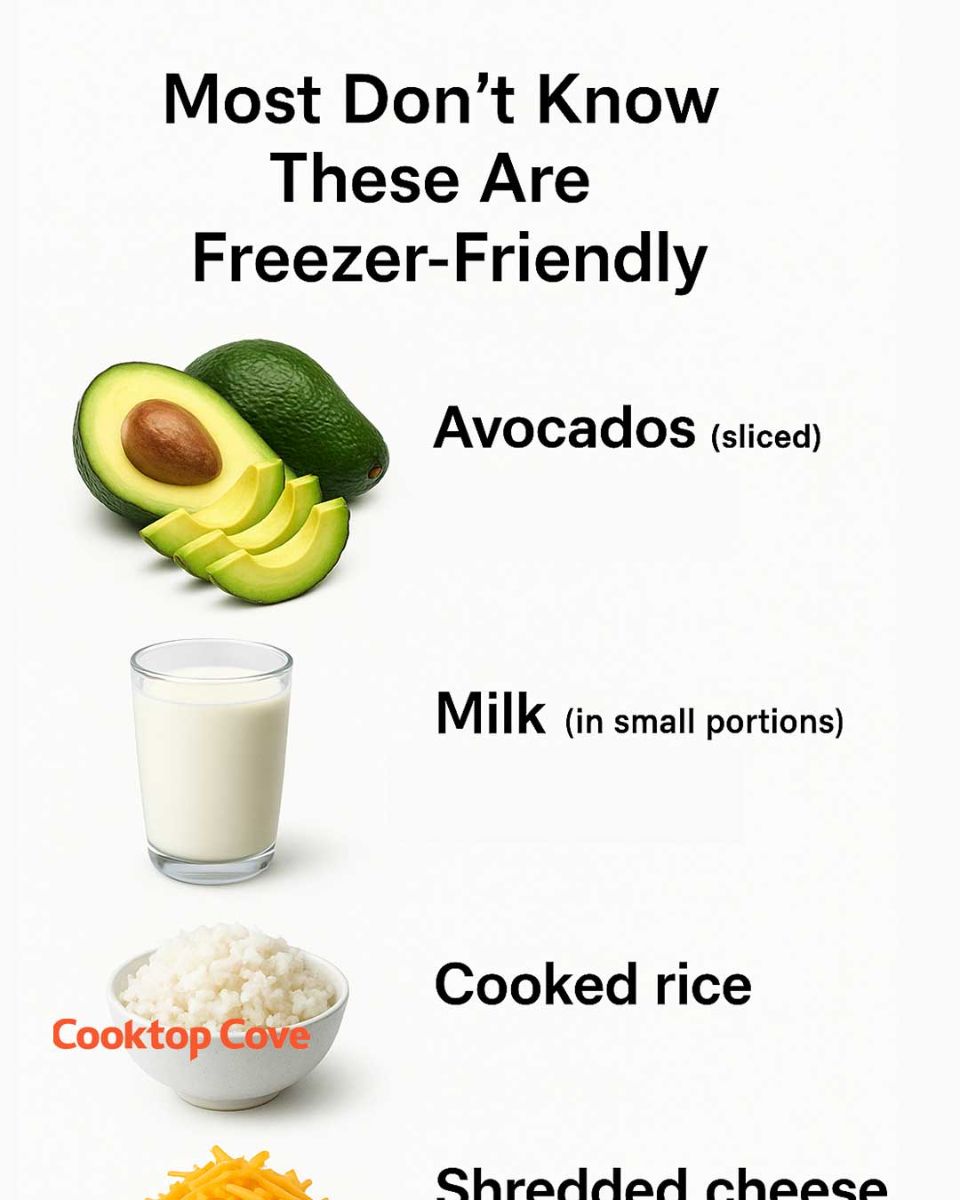
Freezing food is a time-tested method for preserving freshness and extending the shelf life of various ingredients. While most people are familiar with freezing meats, vegetables, and fruits, there are numerous other items that can be frozen to great effect, yet remain largely unknown to many. By expanding your freezer repertoire, you can save money, reduce waste, and always have essential ingredients on hand.
In this article, we will explore a variety of foods that you might not have considered freezer-friendly. From dairy products to fresh herbs, these items can be stored in your freezer to maintain their quality and nutritional value. Let’s delve into these surprising freezer staples and learn how to make the most of your freezer space.
1. Sliced Avocados: Preserve Freshness and Nutrients
Avocados are a beloved fruit, but their short shelf life can be a challenge. To freeze avocados, start by slicing them in half and removing the pit. Scoop out the flesh and slice it into even pieces. Lay the slices on a baking sheet lined with parchment paper and freeze them for about an hour. Once frozen, transfer the slices to a freezer-safe bag, removing as much air as possible to prevent freezer burn.
Frozen avocado slices are perfect for smoothies, guacamole, or spreading on toast. They retain their creamy texture and nutritional benefits, such as healthy fats and vitamins, making them a convenient and nutritious addition to your freezer.
2. Milk: Extend Shelf Life and Reduce Waste
Milk is a staple in many households, but it can spoil quickly if not used in time. To freeze milk, pour it into an airtight container, leaving some space at the top for expansion. Whole milk, skim milk, and even plant-based milks can be frozen effectively. When you’re ready to use it, thaw the milk in the refrigerator and shake well before serving to ensure even consistency.
Freezing milk is an excellent way to prevent waste and ensure you always have some on hand for cooking, baking, or drinking. Just be sure to use it within a month for the best quality.
3. Cooked Rice: Save Time and Minimize Leftovers
Cooked rice is a versatile side dish, but making the perfect amount can be tricky. To freeze cooked rice, allow it to cool completely before portioning it into freezer-safe bags or containers. Flatten the bags to remove excess air and make stacking easier in the freezer.
When you’re ready to use the rice, simply reheat it in the microwave or on the stovetop with a splash of water to restore its fluffy texture. This method saves time on busy nights and helps reduce food waste by preserving leftovers for future meals.
4. Shredded Cheese: Keep It Fresh and Ready to Use
Cheese is a delicious addition to many dishes, but it can mold quickly if not stored properly. Shredded cheese can be frozen easily by placing it in a freezer-safe bag and removing as much air as possible. To prevent clumping, you can add a small amount of cornstarch before freezing.
Frozen shredded cheese is perfect for topping pizzas, casseroles, or tacos. It thaws quickly and maintains its flavor and texture, making it a convenient option for quick meals.
5. Fresh Herbs: Lock in Flavor and Aroma
Fresh herbs add vibrant flavor to dishes, but they can wilt and spoil rapidly. To freeze herbs, wash and dry them thoroughly, then chop them finely. Place the chopped herbs in an ice cube tray and cover with olive oil or water before freezing. Once frozen, transfer the cubes to a freezer bag.
These herb cubes are perfect for adding to soups, stews, or sauces. They retain their aromatic qualities and make it easy to incorporate fresh flavors into your cooking, even when herbs are out of season.
6. Bread: Prevent Staleness and Always Have on Hand
Bread is a staple in many diets, but it can go stale quickly. To freeze bread, slice it and place it in a freezer-safe bag, removing as much air as possible. You can also freeze whole loaves, but slicing them first makes it easier to grab just what you need.
When you’re ready to enjoy your bread, simply toast it directly from the freezer or let it thaw at room temperature. Freezing bread helps prevent waste and ensures you always have fresh slices available for sandwiches or toast.
7. Eggs: A Surprising Freezer Staple
Avocados are a beloved fruit, but their short shelf life can be a challenge. To freeze avocados, start by slicing them in half and removing the pit. Scoop out the flesh and slice it into even pieces. Lay the slices on a baking sheet lined with parchment paper and freeze them for about an hour. Once frozen, transfer the slices to a freezer-safe bag, removing as much air as possible to prevent freezer burn.
Frozen avocado slices are perfect for smoothies, guacamole, or spreading on toast. They retain their creamy texture and nutritional benefits, such as healthy fats and vitamins, making them a convenient and nutritious addition to your freezer.
2. Milk: Extend Shelf Life and Reduce Waste
Milk is a staple in many households, but it can spoil quickly if not used in time. To freeze milk, pour it into an airtight container, leaving some space at the top for expansion. Whole milk, skim milk, and even plant-based milks can be frozen effectively. When you’re ready to use it, thaw the milk in the refrigerator and shake well before serving to ensure even consistency.
Freezing milk is an excellent way to prevent waste and ensure you always have some on hand for cooking, baking, or drinking. Just be sure to use it within a month for the best quality.
3. Cooked Rice: Save Time and Minimize Leftovers
Cooked rice is a versatile side dish, but making the perfect amount can be tricky. To freeze cooked rice, allow it to cool completely before portioning it into freezer-safe bags or containers. Flatten the bags to remove excess air and make stacking easier in the freezer.
When you’re ready to use the rice, simply reheat it in the microwave or on the stovetop with a splash of water to restore its fluffy texture. This method saves time on busy nights and helps reduce food waste by preserving leftovers for future meals.
4. Shredded Cheese: Keep It Fresh and Ready to Use
Cheese is a delicious addition to many dishes, but it can mold quickly if not stored properly. Shredded cheese can be frozen easily by placing it in a freezer-safe bag and removing as much air as possible. To prevent clumping, you can add a small amount of cornstarch before freezing.
Frozen shredded cheese is perfect for topping pizzas, casseroles, or tacos. It thaws quickly and maintains its flavor and texture, making it a convenient option for quick meals.
5. Fresh Herbs: Lock in Flavor and Aroma
Fresh herbs add vibrant flavor to dishes, but they can wilt and spoil rapidly. To freeze herbs, wash and dry them thoroughly, then chop them finely. Place the chopped herbs in an ice cube tray and cover with olive oil or water before freezing. Once frozen, transfer the cubes to a freezer bag.
These herb cubes are perfect for adding to soups, stews, or sauces. They retain their aromatic qualities and make it easy to incorporate fresh flavors into your cooking, even when herbs are out of season.
6. Bread: Prevent Staleness and Always Have on Hand
Bread is a staple in many diets, but it can go stale quickly. To freeze bread, slice it and place it in a freezer-safe bag, removing as much air as possible. You can also freeze whole loaves, but slicing them first makes it easier to grab just what you need.
When you’re ready to enjoy your bread, simply toast it directly from the freezer or let it thaw at room temperature. Freezing bread helps prevent waste and ensures you always have fresh slices available for sandwiches or toast.
7. Eggs: A Surprising Freezer Staple
see next page 💕👇