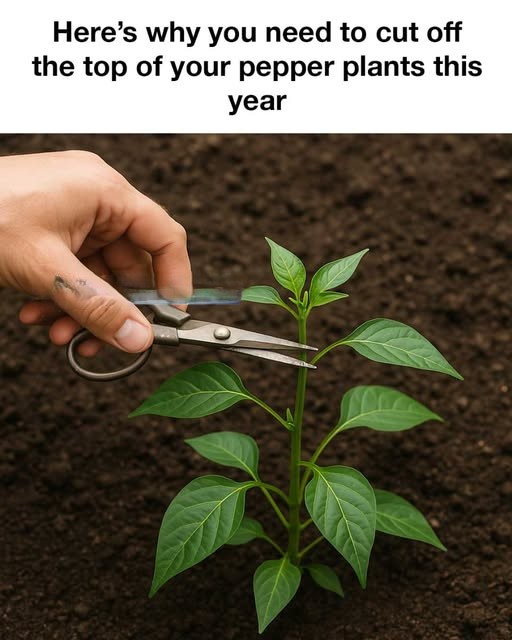
Pruning is a crucial horticultural practice that can significantly impact the health and productivity of your pepper plants. While many gardeners focus on watering, fertilizing, and pest control, pruning is often overlooked. Topping, a specific type of pruning, involves cutting off the top portion of the plant. This technique might seem counterintuitive, but it can lead to a bushier plant and a more abundant harvest. By understanding the principles behind topping, gardeners can maximize their pepper plants’ potential and enjoy a more fruitful growing season.
Understanding the Benefits of Topping Pepper Plants
Topping pepper plants encourages the plant to grow more branches, which can lead to more flowers and, consequently, more peppers. When the top of the plant is removed, it stimulates the growth of lateral shoots. This results in a bushier plant with a larger surface area for photosynthesis, which can enhance the plant’s overall vigor. Additionally, a bushier plant is often more stable and less likely to topple over under the weight of its fruit. By promoting a more robust structure, topping can also improve air circulation within the plant, reducing the risk of fungal diseases.
Top Reasons to Cut Off the Tops of Your Pepper Plants
Increased Yields Through More Branching
Topping encourages the plant to produce side shoots, resulting in more branches. Each new branch has the potential to produce flowers and, ultimately, fruit. This branching effect means a single pepper plant can yield significantly more peppers over the growing season compared to an untopped plant.
Better Height Management
By cutting off the top of the main stem, you control the plant’s vertical growth. This is especially beneficial for indoor growing, small garden spaces, or raised beds where overly tall plants may become difficult to manage or shade out neighboring crops. Compact plants are also easier to inspect and harvest from without damaging the plant.
Increased Resistance to Wind and Rain
A bushier, well-branched plant has a lower center of gravity and a sturdier structure. This makes it more resistant to damage from strong winds or heavy rain, which can easily snap tall, leggy pepper plants. The denser canopy also helps the plant recover more quickly from environmental stress.
Improved Airflow and Light Penetration
Topping results in a more open and evenly spaced canopy, allowing for better airflow around the foliage. This reduces the likelihood of fungal diseases and helps ensure that light reaches more parts of the plant, which promotes overall healthier growth.
More Uniform and Aesthetically Pleasing Shape
Topped plants tend to develop into symmetrical, rounded forms. This not only looks more attractive in the garden but also contributes to a more organized and easily maintained planting layout. Uniformity is especially appreciated in ornamental or urban gardens where visual appeal is important.
Earlier Fruiting (in Some Cases)