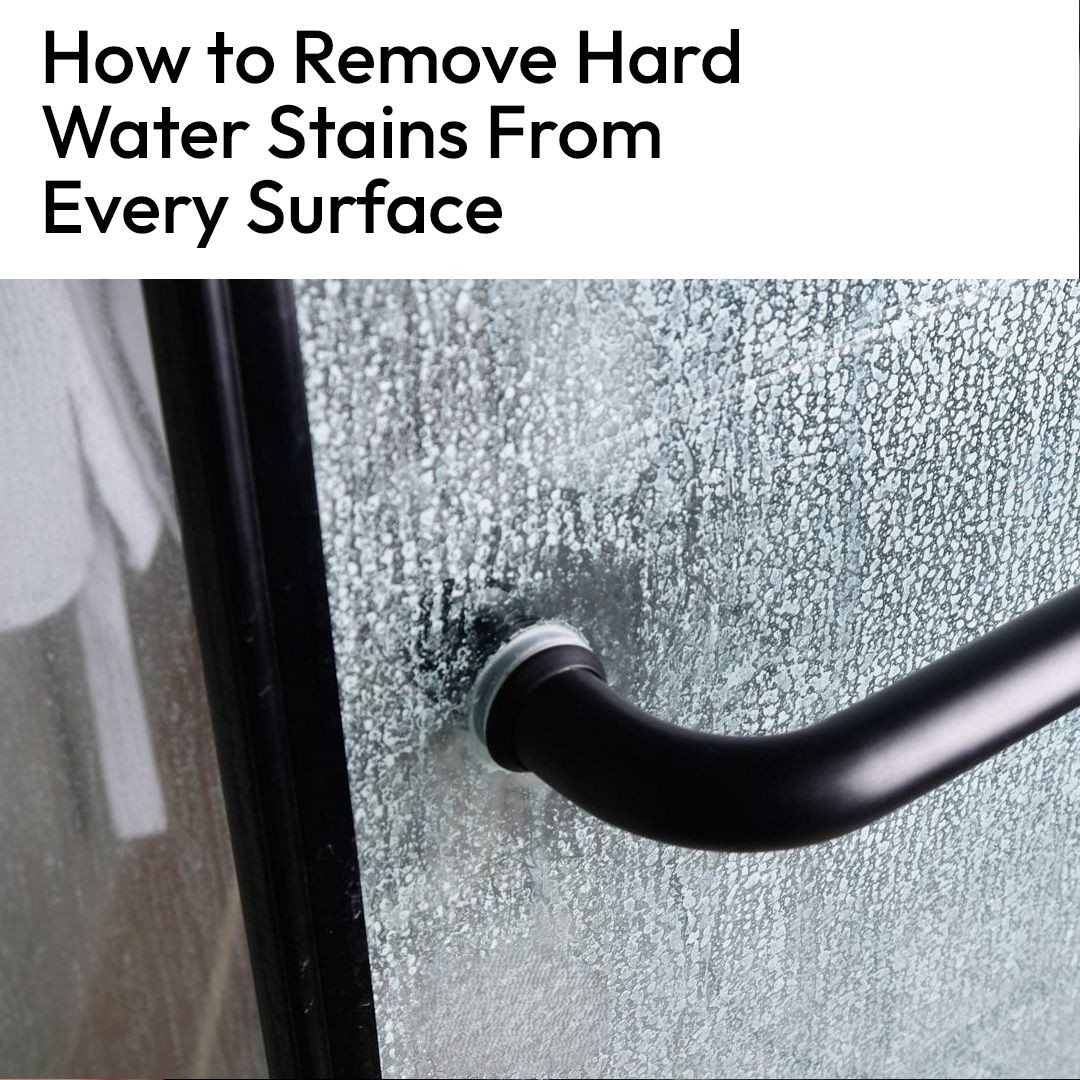
Learn how to remove stubborn hard water stains from all kinds of household surfaces.
If you have hard water in your home, you’re likely familiar with hard water stains. These white, dusty deposits can be found on shower doors, drinking glasses, granite countertops, dishwashers and virtually any bathroom fixture. Not only are these stains unsightly, but if left untreated, they can also etch into surfaces. That’s why it’s important to tackle them quickly.
The challenge? Hard water stains don’t just wipe away with a quick swipe of a paper towel or damp rag. They are actually hardened mineral deposits that require a little more effort and elbow grease to remove properly. Below, you’ll find tips for removing hard water stains from nearly every surface in your home, with expert guidance from Janet Thaeler of Clean Freak and Germaphobe.
What Causes Hard Water Stains?
Calcium and magnesium deposits in hard water are left behind after water droplets evaporate, causing hard water stains. The white, chalky residue you see is the dried mineral buildup left on surfaces. In high-traffic areas, water frequently splashes onto surfaces, evaporates and leaves these minerals behind. Over time, this process repeats, leading to a buildup of stubborn deposits.
How To Remove Hard Water Stains From Every Surface
You’ll want to tackle hard water stains quickly and often to avoid a built-up layer, which is harder to remove. For all the surfaces addressed in this article, you’ll need gloves, a clean rag or scrub brush and various cleaning supplies, which will be outlined below. Where white vinegar is useful, opt for cleaning vinegar with a concentration of 10 to 30 percent.
For stubborn stains, let cleaning solutions sit for as long as an hour. Repeat treatments may also be necessary.
1 / 10

glass of shower cabin covered in limescale
serebryannikov/Getty Images
How to remove hard water stains from glass
Hard water stains can form on window glass above sinks, in showers or from outdoor sprinklers. It’s important to clean these stains promptly, as they can etch the glass. “If it’s etched into the glass for years, it may be impossible to remove because it’s actually pitted the glass,” says Thaeler.
To clean, use white vinegar or a baking soda-water paste. Apply vinegar, wait 10 to 15 minutes, then scrub with a soft sponge. For baking soda, scrub with a toothbrush, rinse and finish with glass cleaner. Repeat if needed.
2 / 10

cleaning stove with microfiber cloth
xefstock/Getty Images
How to remove hard water stains from stainless steel
Stainless steel appliances like microwaves, refrigerators, stoves or sinks can develop hard water stains. To remove from these surfaces, you can use white vinegar, baking soda, lemon, or club soda.
Stainless steel surfaces can scratch easily, so don’t use a scrub sponge or abrasive cleaner. Instead, use a microfiber cloth dampened with your chosen cleaning solution to gently rub the surface to remove any hard water stains.
3 / 10

Marks on tiles in a shower from the water and limescale
Ana-O/Getty Images
How to remove hard water stains from shower doors and tile
Shower doors and tile can quickly accumulate hard water deposits without regular cleaning. To clean hard water stains, combine white vinegar with a small amount of dish soap to form a gel, ideally with warmed vinegar. Brush it onto the tile and doors using a foam or chip brush in circular motions. Let it sit for 10 to 15 minutes, then wipe clean with a towel. Finish by applying glass cleaner and wiping it clear.
4 / 10

woman wiping granite kitchen counter
Grace Cary/Getty Images
How to remove hard water stains from granite
Hard water stains can also quickly etch granite, so timely removal is important. To clean hard water stains on granite counters, avoid acidic cleaners like vinegar, which can damage the surface. Instead, use a baking soda-water paste to scrub stains or create a poultice. To make a poultice, apply the paste to the stain, cover with plastic wrap and tape the edges to seal. Let it sit for 24 hours, then remove, scrub the area and clean as needed.
5 / 10